Recommendations for reducing the impact on the human body depending on the degree of atmospheric air quality
| PM 2.5 | Description |
|---|---|
| Green (0-60) µg/m³ | The quality of atmospheric air is considered good, normal activities can be carried out outdoors without any restrictions. In such cases, recommendations are not sent to the population. |
| Yellow (60.1-120) µg/m³ | The quality of atmospheric air is considered satisfactory, some sensitive people may experience deterioration. In such cases, persons with chronic respiratory diseases and those sensitive to polluted air (when throat irritation, sneezing, coughing or difficulty breathing occurs) are advised to limit physical activity outdoors. The rest of the population can continue their usual lifestyle. |
| Orange (120.1-180) µg/m³ | Indicates a moderate level of atmospheric air pollution. Sensitive groups of the population (persons with respiratory and cardiovascular diseases, children, pregnant and lactating women, as well as the elderly) may experience discomfort. Representatives of sensitive groups should, if possible, limit physical activity outdoors; persons with respiratory and cardiovascular diseases should always keep medicines recommended by a doctor with them and take them if necessary; the rest of the population can be outdoors as usual, but if the first signs of irritation of the mucous membranes of the nose and throat appear, it is recommended to reduce physical activity outdoors. The use of protective masks is also appropriate. |
| Red (180.1-300) µg/m³ | Considered a high level of atmospheric air pollution. Poses a serious danger to healthy population, causes discomfort to sensitive groups of the population (persons with respiratory and cardiovascular diseases, children, pregnant and lactating women, as well as the elderly). Representatives of these sensitive groups should sharply reduce physical activity outdoors and, if possible, stay indoors, persons with respiratory and cardiovascular diseases should always keep medicines recommended by a doctor with them and take them if necessary, others can be outdoors as usual, but it is recommended to use protective masks, if discomfort is felt in the nose, throat and eyes, reduce physical activity. |
| Purple (300.1+) µg/m³ | The quality of atmospheric air is considered unsatisfactory. All people, even healthy ones, should avoid prolonged exposure to the open air, vulnerable segments of the population must definitely stay at home or limit going outside as much as possible, completely refrain from physical exercises and sports, if it is necessary to go outside, it is recommended to use protective masks and limit exposure to the open air as much as possible. Transition to remote (online) work and study mode is recommended. Mass events and sports competitions held outdoors should be canceled or postponed to another time. |
The environment is combination of its natural environmental components (atmospheric air, surface water and groundwater, soil, subsoil), landscape and objects, which define the living conditions of human, habitats for animals, plants and other living organisms.
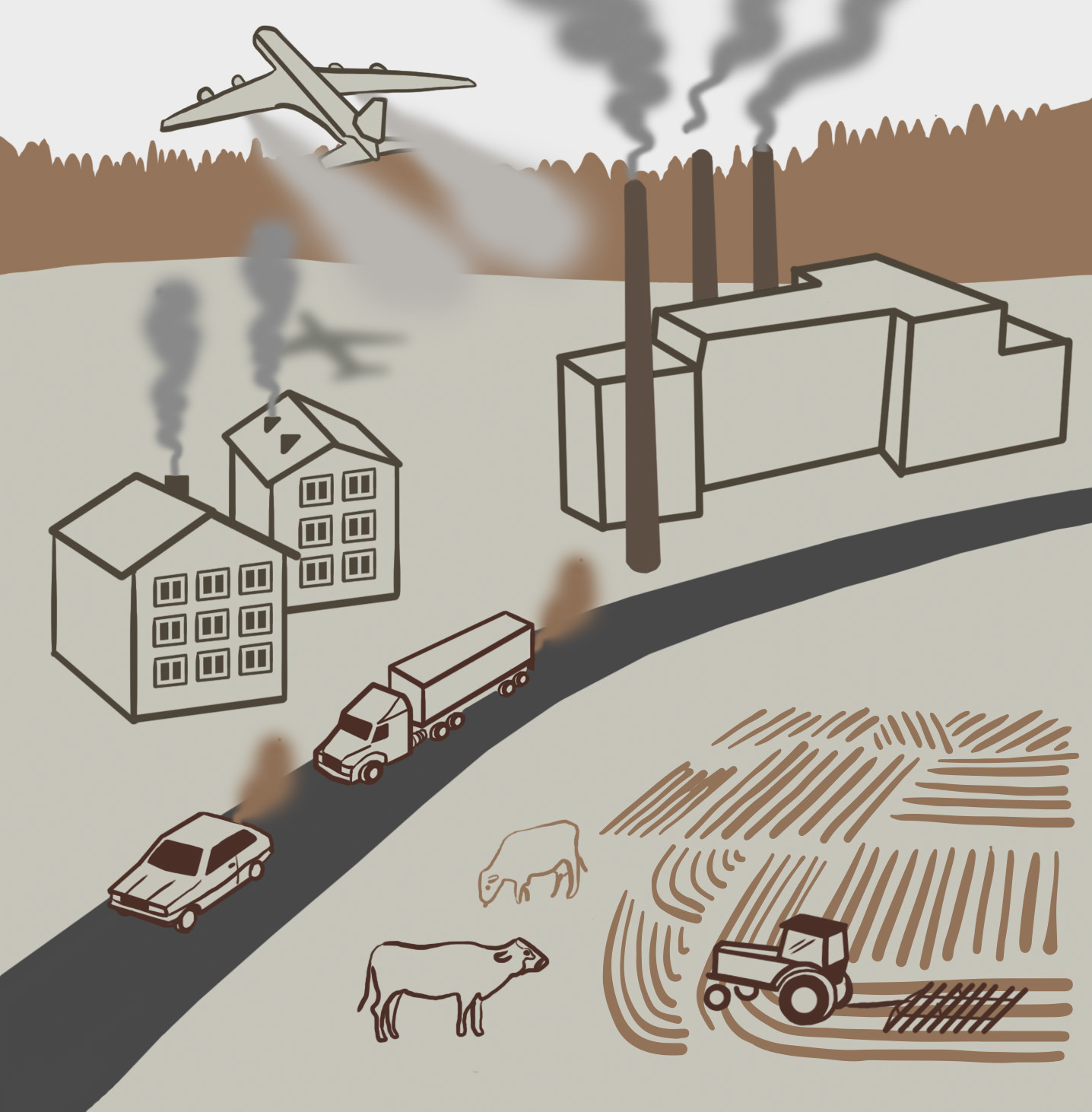
Environmental contamination is high content of physical, chemical and biological reagents in it, which are not typical for this environment, brought externally, the presence of which leads to negative consequences. Emissions and discharges are the main source of contamination of atmospheric air, water and soil on regional and global scales.
Environmental assessment is carried out by the help of the synthesis and analysis of consistent monitoring (periodic and current), focus and intensity of changes, comparison of obtained indicators with the standards of environmental quality taking into account possible environmental damage.